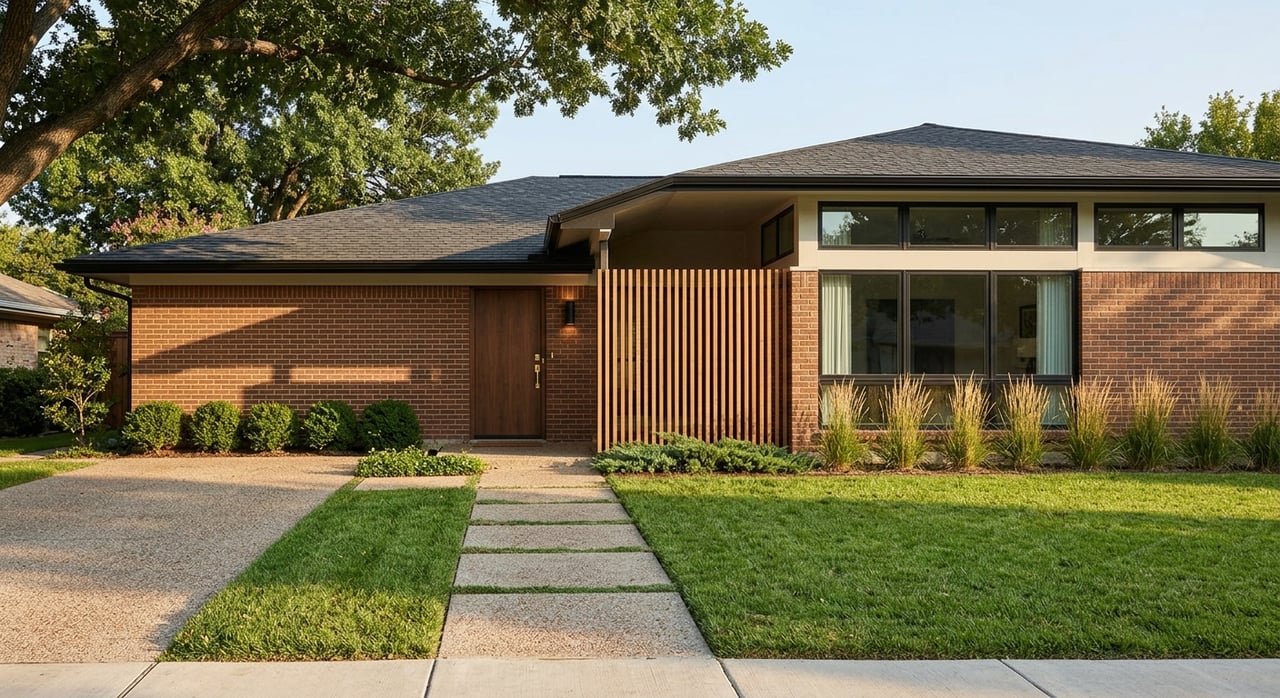
Curious why so many Denver buyers keep circling back to Southern Hills and University Hills when they want a mid-century home? These neighborhoods offer a hard-to-fake mix of postwar character, established streetscapes, and homes with real renovation potential. If you are trying to decide whether one of these areas fits your style, budget, and long-term goals, this guide will help you understand what stands out and what to look for before you buy. Let’s dive in.
Why mid-century homes stand out here
Southern Hills and University Hills grew during Denver’s major postwar building boom. Historic Denver notes that the 1950s and 1960s were the city’s biggest decades for new detached-home construction, with much of that activity focused in south Denver neighborhoods like University Hills and the broader Wellshire area that includes Southern Hills.
That history still shows up in the homes you see today. You will find low-slung rooflines, attached garages, wide front windows, and a strong horizontal look that feels very different from newer two-story construction. For many buyers, that design gives these neighborhoods a timeless, grounded feel.
Southern Hills: classic ranch character
Southern Hills has one of the clearest mid-century identities in south Denver. Historic Denver describes it as the western half of the broader Wellshire area, platted in six filings between 1948 and 1957, with curved, tree-lined streets and ranch homes defined by low-pitched roofs and attached garages.
That layout matters when you drive the neighborhood. The curving streets, mature landscaping, and consistent home styles create a cohesive look that many buyers find appealing. It tends to feel intentional rather than pieced together over time.
Historic Denver’s survey found that 95 percent of single-unit buildings in the Wellshire survey area were ranch form. In practical terms, that means Southern Hills offers a more consistently one-story, mid-century streetscape than many other Denver neighborhoods where newer infill or mixed architecture changes the visual rhythm block by block.
Southern Hills also has long-standing community anchors, including Slavens Elementary and McWilliams Park. From a home search perspective, those nearby institutions help explain why the area has a stable residential feel and lasting appeal.
What the homes usually look like
If you are shopping in Southern Hills, expect a lot of true ranch-style features, including:
- One-story massing
- Low-pitched roofs
- Wide overhanging eaves
- Large picture windows
- Attached garages
- Strong horizontal lines
Split-levels and bi-levels do exist in the broader area, but they are less common. If your goal is a classic mid-century ranch, Southern Hills gives you a strong chance of finding one.
University Hills: postwar roots with more variety
University Hills has a slightly different story. The neighborhood was annexed to Denver in 1944 and 1946, and construction began in 1951. According to the neighborhood association, the original development included four home models, called the Columbine, Suburban, Modernaire, and Belfour, and by 1953 about 2,200 houses had already been built.
That fast growth helped shape the neighborhood you see today. University Hills developed around the University Hills Shopping Center, which the neighborhood association identifies as the first regional center to open in Denver in the postwar period. This gave the area a practical, connected feel from early on.
For buyers, University Hills often offers more variation than Southern Hills. The Near Southeast Area Plan says the interior of University Hills North developed with rows of single-story ranch homes after World War II, while multi-family uses and commercial development accumulated more along perimeter corridors.
Why that matters when you buy
In simple terms, not every part of University Hills will feel the same. Homes on interior residential streets may offer a quieter postwar neighborhood feel, while homes closer to major corridors may experience more traffic, noise, and nearby redevelopment pressure.
That does not make one choice better than the other. It just means you should match the location to your priorities. If you want easy access and a more connected setting, edge locations may appeal to you. If you want a more tucked-away feel, interior blocks may be a better fit.
How Southern Hills and University Hills compare
Both neighborhoods appeal to buyers who want established homes and room for thoughtful updates. Still, they tend to offer different experiences.
| Feature | Southern Hills | University Hills |
|---|---|---|
| Development period | Mostly platted 1948 to 1957 | Annexed in 1944 and 1946, building began in 1951 |
| Typical feel | Strongly cohesive ranch neighborhood | More varied, with ranch interiors and busier corridor edges |
| Streetscape | Curved, tree-lined streets | Mix of interior residential blocks and perimeter commercial influence |
| Home style | Heavily ranch-oriented | Ranch homes plus broader surrounding land use mix |
| Buyer appeal | Buyers who want classic mid-century consistency | Buyers who want postwar character with more location variety |
If your priority is a classic, low-profile ranch neighborhood with a very consistent visual identity, Southern Hills may stand out. If you want mid-century roots but value a broader range of settings within the neighborhood, University Hills may give you more options.
What to know about floor plans
Many of these homes were built for postwar households, and that affects how they live today. The University Hills neighborhood association notes that early homes were designed for young families and may not feel especially spacious by today’s standards, even if they worked well for the era.
That usually means you should pay close attention to layout, not just square footage. A home may have great bones and architectural character but still need kitchen updates, improved flow, or more flexible living space. This is especially important if you work from home or want more open gathering areas.
In Southern Hills, the strong ranch tradition can be a plus if you want single-level living. At the same time, the original neighborhood design favored low, restrained home forms, so larger expansions can be more visually complicated than they would be in neighborhoods with less consistent architecture.
Renovation potential and smart updates
One reason buyers keep looking at mid-century homes in these neighborhoods is the potential to improve them over time. Historic Denver’s guidance on postwar homes points to a practical pattern: the most successful remodels often modernize the interior while keeping the exterior scale, low rooflines, and horizontal proportions intact.
That is especially relevant in Southern Hills. Because the neighborhood was shaped by original covenants that controlled house height and square footage, its design language tends to be intentionally low and understated. Even if those early covenants do not function today as a blanket rule for every remodel, they help explain why additions need thoughtful planning.
If you are considering a remodel, focus on updates that respect the original form of the house. In many cases, buyers get the best long-term result when they improve livability inside while preserving the exterior character that made the home desirable in the first place.
Renovation ideas that often fit mid-century homes
- Refresh kitchens and baths without overcomplicating the floor plan
- Improve natural light while preserving the home’s horizontal look
- Update finishes and systems for modern comfort
- Rework interior flow to better connect living spaces
- Plan additions carefully so they do not overpower the original structure
What buyers should inspect carefully
Older homes can be rewarding, but they also require a sharper eye. If you are buying in Southern Hills or University Hills, it helps to go beyond cosmetic updates and look closely at age-related issues and prior renovation work.
Homes built before 1978 may contain lead-based paint, and the Environmental Protection Agency says the older the home, the more likely lead-based paint is present. If you plan to renovate, this becomes especially important.
Asbestos can also appear in older building materials such as floor tile, ceiling tile, pipe wrap, shingles, siding, and insulation. The EPA advises that suspect materials should be tested by an accredited professional if they are damaged or may be disturbed during renovation.
In Colorado, radon testing should also be on your list. The Colorado Department of Public Health and Environment recommends home radon testing and states that radon is the leading cause of lung cancer among non-smokers, contributing to about 500 lung cancer deaths annually in Colorado.
For Southern Hills in particular, larger lots and mature landscaping can add another layer to your inspection checklist. It is wise to look carefully at drainage, the quality of past additions, and tree-related maintenance, since those factors can affect both day-to-day upkeep and future project costs.
Who these neighborhoods tend to fit best
Southern Hills and University Hills often appeal to buyers who want more than a turnkey cookie-cutter house. You may be drawn to these areas if you value architectural character, established streets, and the chance to make thoughtful updates over time.
Southern Hills is often a strong fit if you want a more uniform ranch-home environment and a calm residential setting. University Hills may fit you better if you want postwar housing stock with a wider range of block-by-block experiences.
Either way, the key is to look at the details that affect daily life. Street location, floor plan, renovation history, lot condition, and long-term update potential all matter just as much as style.
If you are exploring mid-century homes in Southern Hills or University Hills, we can help you compare streets, spot renovation upside, and evaluate what makes one property a better fit than another. When you are ready for local guidance and hands-on support, connect with The Tack Group.
FAQs
What defines a mid-century home in Southern Hills?
- In Southern Hills, mid-century homes are typically ranch-style houses with one-story massing, low-pitched roofs, attached garages, wide overhanging eaves, and a strong horizontal design.
What makes University Hills different from Southern Hills?
- University Hills generally offers more variety, with postwar ranch homes on interior streets and a broader mix of multi-family and commercial development along perimeter corridors.
Are Southern Hills homes mostly ranch homes?
- Yes. Historic Denver’s Wellshire survey found that 95 percent of single-unit buildings in the survey area were ranch form, which helps explain Southern Hills’ consistent mid-century look.
Do mid-century homes in University Hills have smaller layouts?
- Some do. The University Hills neighborhood association notes that many early homes were designed for young families and may not feel as spacious by today’s standards.
What should buyers inspect in older Denver mid-century homes?
- Buyers should pay close attention to lead-based paint, possible asbestos in older materials, radon testing, prior renovation quality, drainage, and maintenance related to mature trees and larger lots.
Can you remodel a mid-century home in Southern Hills without losing its character?
- Yes. Many of the best updates improve the interior for modern living while keeping the home’s low rooflines, single-story scale, and horizontal proportions intact.